


Cat Ate Bread? Safety, Risks, and What to Do
When it comes to our feline friends, their dietary preferences can sometimes be puzzling. While cats are obligate carnivores, meaning that they primarily need meat to thrive, it’s not uncommon for them to show interest in foods outside their natural diet. One such curiosity is bread. It may surprise many cat owners when their pet seemingly becomes a “bread bandit,” sneaking a bit of bread whenever they get the chance. But is it safe for cats to eat bread, and what types of bread might pose risks?
Understanding Cats and Bread
Do Cats Like Bread?
Many cats seem to like bread, but this affinity may be more about curiosity than actual preference. Cats don’t need bread in their diet, and bread doesn’t provide the nutritional benefits that are necessary for their health. The texture or the yeast in baked bread might attract a cat, but it’s essential to remember that just because a cat may like bread doesn’t mean it’s a suitable food for cats. Bread shouldn’t replace regular cat food, which is formulated to meet all of a cat’s dietary needs.
Why Cats Might Eat Bread
Cats might eat bread for several reasons, ranging from simple curiosity to the appealing smell of freshly baked bread. Sometimes, the presence of certain ingredients, such as butter or oils, makes bread more enticing. Similarly, if a cat eats bread, it may be due to the scent of yeast or the texture of baked bread. However, bread isn’t a necessary part of a cat’s diet, and it’s important to consider that bread can be bad for cats when consumed in large amounts or when containing ingredients that are toxic to cats.
Common Types of Bread Cats Encounter
There are many types of bread that cats might encounter, from plain bread to more complex varieties like banana bread or sourdough. While plain white bread or a small amount of bread might not be immediately harmful, other types, especially those containing chocolate, raisins, or garlic, can be dangerous for cats.
| Bread Type | Effect on Cats |
|---|---|
| Plain White Bread | Not immediately harmful in small amounts |
| Chocolate, Raisins, or Garlic Bread | Can be dangerous for cats |
Bread dough, particularly raw bread dough, is especially harmful to cats, as it can expand in their stomach and lead to serious health issues. It’s crucial for cat owners to be vigilant and ensure that bread doesn’t become a regular food for their pets.
Risks of Cats Eating Bread
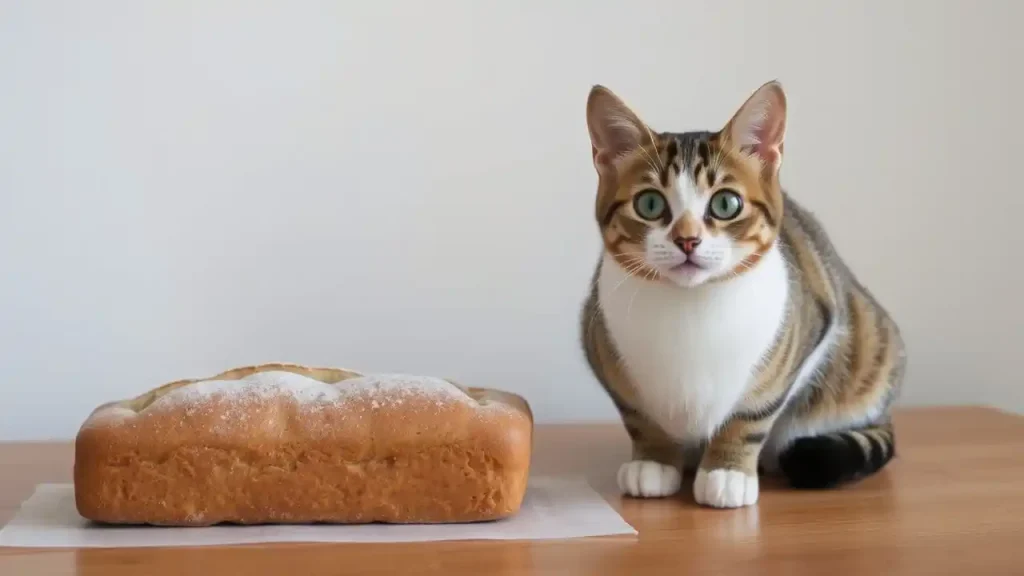
Is Bread Bad for Cats?
While many cats love bread, it is important to remember that bread is not a necessary component of their diet. Cats are obligate carnivores, meaning their bodies are designed to thrive primarily on meat. Bread doesn’t provide the essential nutrients and proteins that cat food does, and therefore, it should not replace a cat’s regular meals. While a bit of plain bread may not be harmful in small amounts, it’s generally not advisable to give your cat bread regularly.
Potential Health Risks of Bread for Cats
Feeding bread to cats can pose several health risks, especially when it comes to certain types of bread. Ingredients that are toxic to cats, such as chocolate or raisins, are sometimes found in bread and can be harmful to them.
| Bread Type | Potential Risk |
|---|---|
| Raw bread dough | Yeast can cause it to expand in their stomach, potentially leading to bloat or other serious complications. |
| White bread with high sugar content | Can lead to obesity or digestive issues if eaten in excess. |
What Happens If Your Cat Ate Bread?
If your cat ate a small amount of plain bread, it’s likely that they will be fine, but it’s always wise to monitor them for any unusual behavior. If the bread contained harmful ingredients or if your cat consumes raw dough, you should contact your veterinarian immediately. Symptoms such as vomiting, diarrhea, or lethargy could indicate a problem. In such cases, it’s crucial to act quickly to ensure your cat’s health is not compromised. Always keep bread out of reach to prevent any accidental consumption.
Safe Practices for Feeding Cats
Can You Give Your Cat Bread as a Treat?
While many cats love bread, offering it as a treat should be approached with caution. Cats are obligate carnivores and don’t require bread in their diet. Occasionally giving your cat a small piece of plain bread might not be harmful, but it should never substitute their regular cat food. It’s important to avoid bread containing ingredients that are toxic to cats, such as garlic or raisins. Always ensure that any bread offered is safe for cats to eat and given in moderation.
Alternatives to Bread for Treating Cats
Instead of bread, consider offering your cat treats that align with their carnivorous dietary needs.
| Treat Type | Benefits |
|---|---|
| High-quality protein treats such as freeze-dried chicken or fish | Satisfy a cat’s natural craving for meat and provide nutritional benefits absent in bread |
| Specially formulated cat treats | Designed to be safe for cats and meet their dietary requirements, making them a healthier choice |
When to Consult a Veterinarian
If your cat has eaten bread containing harmful ingredients or if you’re unsure about the safety of a particular kind of bread, it’s crucial to consult a veterinarian. Symptoms such as vomiting, diarrhea, or signs of distress warrant immediate attention. Additionally, if your cat frequently consumes bread or other non-cat food items, seeking veterinary advice can help address any underlying dietary imbalances or behavioral issues. Professional guidance ensures your cat’s health and well-being are prioritized.
Dealing with Bread Bandits
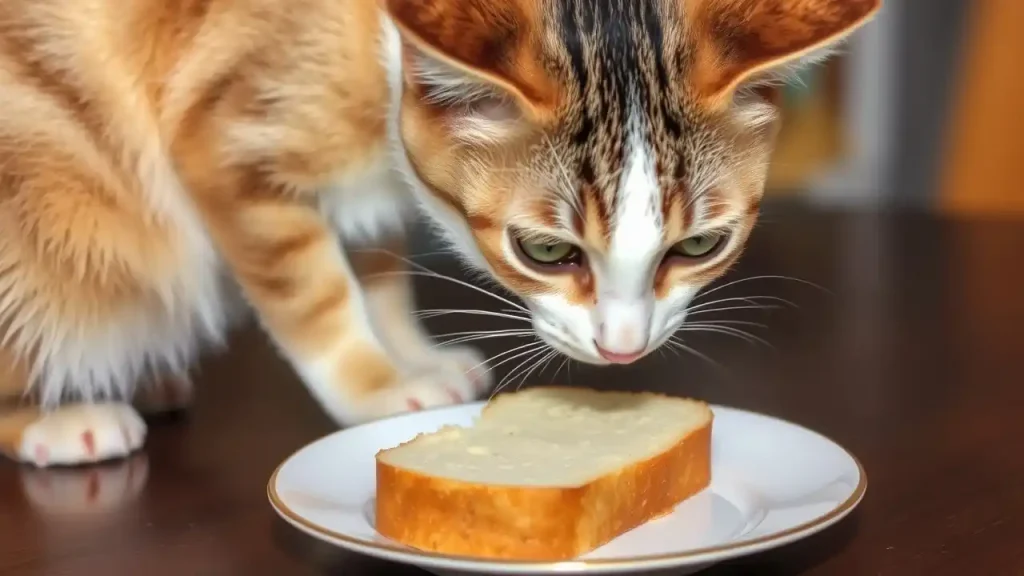
Preventing Your Cat from Stealing Bread
To prevent your cat from becoming a “bread bandit,” it’s essential to limit their access to bread. Store bread in secure containers or cabinets that are out of their reach. Training your cat to avoid food on kitchen counters can also be beneficial. Providing engaging toys and ensuring their dietary needs are met with appropriate cat food can reduce their curiosity about human foods like bread, minimizing the chances of them sneaking a bite.
How to Safely Store Bread Away from Cats
Proper storage of bread is key to keeping it away from curious cats. Utilizing bread boxes or sealed plastic containers can effectively deter cats from accessing bread. Ensure that bread is stored in a cool, dry place that your cat cannot reach, such as a high pantry shelf. By storing bread securely, you avoid accidental consumption by your cat, which might lead to health issues if the bread contains ingredients that are dangerous for cats.
Training Your Cat to Avoid Bread
Training your cat to avoid bread involves consistent reinforcement of boundaries. Redirect their attention with toys or treats when they show interest in bread or other non-cat food items. Using deterrents like a gentle spray of water when they attempt to jump onto counters can reinforce this behavior. Positive reinforcement with treats when they stay away from bread can also encourage them to focus on their food, ensuring they don’t develop a habit of seeking out human foods.