

Dog Eats Cat Treats? Cat Food? Is It Safe?

Understanding the dietary habits of your pets is crucial for their health and well-being. Many pet owners have found themselves wondering whether it’s safe for their dogs to eat cat treats or cat food. This is a common question, especially in households where both cats and dogs reside. It’s essential to know the differences between dog and cat food, as well as the nutritional needs of each. Understanding these distinctions will help you make informed decisions about feeding cat treats to your dog and whether it might be safe for them to indulge in the occasional cat treat.
Understanding the Differences Between Dog and Cat Food
Composition of Cat Food vs Dog Food
The primary difference between dog and cat food lies in their composition. Here are some key distinctions:
- Cats are obligate carnivores, which means their diet requires a higher concentration of protein and fat than dogs, who are omnivores.
- Cat food is typically richer in protein and contains essential nutrients like taurine, which is crucial for cats’ health but not necessary for dogs.
- Dog food is formulated to be a more balanced diet with a variety of nutrients, including carbohydrates, which dogs can digest more efficiently than cats.
Given these differences, feeding cat food to dogs regularly could lead to an imbalance in their nutritional intake.
Nutritional Needs of Dogs and Cats
The nutritional needs of dogs and cats are distinct due to their differing dietary requirements. Dogs need a variety of nutrients to stay healthy, including:
- Proteins, fats, and carbohydrates
- Vitamins and minerals
They thrive on a balanced diet that supports their omnivorous nature. Conversely, cats need a diet that is almost exclusively meat-based, as they require high levels of protein and specific vitamins like taurine, which they cannot produce on their own. While dogs can eat cat food occasionally without immediate harm, it should not replace their regular diet, as the lack of balance could lead to issues like weight gain or nutrient deficiency.
Why Dogs May Prefer Cat Food
There are several reasons why a dog may prefer cat food over dog food. Here are some key factors:
- The higher protein and fat content in cat food can make it more appealing to dogs, as it tends to have a richer taste and smell.
- Additionally, dogs are often curious creatures, and the novelty of a different type of food can attract their attention.
However, feeding cat treats to dogs or allowing them to eat cat food regularly is not advisable. The high-fat content in cat food can be bad for dogs, potentially causing digestive issues such as vomiting or diarrhea. Therefore, while dogs can eat cat food occasionally, it should be monitored closely to ensure it remains safe for dogs to eat.
Is It Safe for Dogs to Eat Cat Treats?
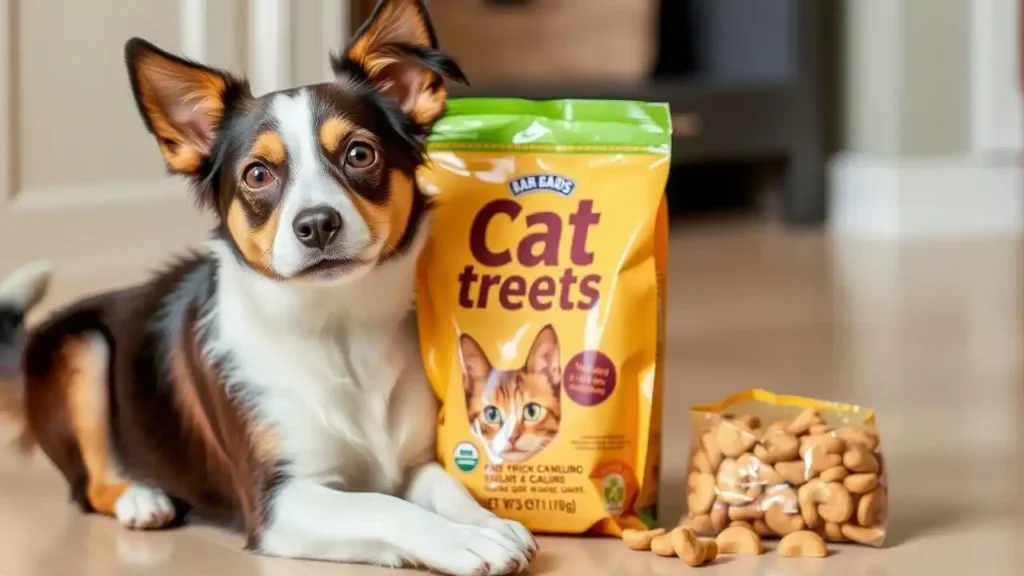
When considering whether it’s safe for dogs to eat cat treats, it’s essential to understand the differences between dog treats and cat treats. While cats are obligate carnivores, requiring high levels of protein and fat, dogs are omnivores and thrive on a balanced diet that includes carbohydrates, vitamins, and minerals. Cat treats are often richer in protein and fat, which can be appealing to dogs but might not be suitable for their overall health. Feeding cat treats to your dog occasionally may not be harmful, but it’s crucial to monitor the amount of cat treats given to avoid potential health issues. Ensuring your dog receives a balanced diet tailored to their nutritional needs is vital for their well-being.
Potential Risks of Feeding Cat Treats to Dogs
Feeding cat treats to dogs may pose several risks due to the differences in their dietary requirements. High protein and fat content in cat treats could contribute to digestive issues such as vomiting or diarrhea in dogs. Additionally, since cat treats are not formulated with a dog’s balanced diet in mind, regular consumption could lead to nutrient imbalances or weight gain. Some cat treats also contain ingredients like catnip, which, while enticing to cats, may not be safe for dogs to eat. Dog owners should be cautious and avoid using cat treats as regular dog treats, as what is safe for cats to eat might not be safe for dogs. Instead, opt for treats specifically made for dogs.
Safe Cat Treats for Dogs: What to Look For
If you choose to occasionally give your dog cat treats, it’s important to select options that are safe for dogs to eat. Look for treats that are low in fat and protein to prevent potential digestive problems. Avoid treats containing catnip or other ingredients that could be harmful to dogs. Always check the label to ensure there are no added sugars or artificial additives, which can be bad for dogs. When introducing any new treat, monitor your dog for any adverse reactions. While some cat treats might be safely consumed by dogs in small quantities, they should never replace dog treats or a balanced diet designed to meet your dog’s specific nutritional needs.
Signs of Digestive Issues in Dogs
When dogs eat cat treats or food not intended for them, they may experience digestive issues. Common signs of digestive distress include vomiting, diarrhea, and a noticeable decrease in appetite. Dogs may also exhibit lethargy or discomfort, particularly if they are experiencing abdominal pain. If your dog ate a substantial amount of cat food or treats, monitor them for any changes in behavior or physical condition. Persistent symptoms should not be ignored, as they could indicate a more serious underlying issue. Consulting with a veterinarian is always recommended if your dog shows signs of digestive problems, ensuring they receive the appropriate care and dietary adjustments to regain their health.
Feeding Cat Food to Dogs: What You Need to Know
Short-Term Effects of Dogs Eating Cat Food
When a dog eats cat food, the short-term effects can vary depending on the dog’s size, health, and the amount of cat food consumed. Dogs are omnivores and can digest a variety of nutrients, but the high protein and fat content in cat food could cause immediate digestive issues. Symptoms like vomiting and diarrhea are common signs that a dog may have consumed too much cat food or that their system is not tolerating the cat food well. While an occasional indulgence in cat food might not be dangerous, it is not typically safe for dogs to eat cat food regularly. Monitoring your dog for any adverse reactions after they eat cat food is crucial to ensure their health and safety.
Long-Term Health Risks for Dogs
Long-term consumption of cat food by dogs can lead to significant health issues. The nutritional imbalance caused by the difference between dog and cat food can result in nutrient deficiencies or excesses. Dogs need a balanced diet that includes the right mix of protein, fats, carbohydrates, vitamins, and minerals. Regularly feeding cat food to dogs could lead to weight gain due to the higher calorie content, and the lack of essential nutrients might affect their overall health. Moreover, the absence of certain vitamins and nutrients needed by dogs could weaken their immune response and lead to other health problems. Ensuring your dog’s diet is balanced and specifically tailored to their needs is vital for preventing these long-term health risks.
Alternative Treats for Your Dog
Instead of resorting to cat treats, dog owners can explore a variety of safe treats for dogs that meet their nutritional needs. Treats made specifically for dogs are formulated to complement their balanced diet, providing the right amount of protein and fat without the risk of digestive upset. Dog treats and cat treats are different, and opting for dog treats ensures that the treats are safe for dogs to eat. Look for treats that are low in calories, free of artificial additives, and enriched with vitamins and minerals. Additionally, homemade treats using ingredients like lean meats, vegetables, and grains can be a healthy alternative. These options not only satisfy your dog’s taste buds but also contribute to their overall well-being.
Catnip and Its Effects on Dogs

What is Catnip and How Does it Affect Dogs?
Catnip, scientifically known as Nepeta cataria, is a herbaceous plant that is famously known for its intoxicating effects on cats. Cats often react to catnip with behaviors like rolling, purring, and increased playfulness due to the compound nepetalactone. However, when it comes to dogs, the effects of catnip are quite different. Dogs are omnivores, and their interaction with catnip does not typically result in the same euphoric experience seen in cats. Instead, catnip may have a calming effect on dogs, potentially aiding in relaxation or easing anxiety. While some pet owners may be curious about giving their dogs catnip, it’s important to note that not all dogs will react to it, and its safety and efficacy can vary.
Can Dogs Eat Catnip Treats Safely?
When considering whether dogs can safely eat catnip treats, it’s essential to recognize the difference between dog and cat treats. While catnip treats are specifically designed for cats, some dogs may also enjoy them occasionally. Catnip is generally considered safe for dogs to eat in small amounts, but it should not be a regular part of their diet. The treats could serve as a novel treat, but overconsumption may lead to digestive issues such as vomiting or diarrhea. Dog owners should exercise caution and closely monitor their pets for any adverse reactions when introducing catnip treats. It’s also advisable to consult with a veterinarian before adding any new treats to ensure they align with the nutritional needs of the dog.
Differences Between Catnip and Traditional Dog Treats
The difference between dog treats and catnip treats lies primarily in their intended effects and nutritional composition. Traditional dog treats are formulated to meet the specific dietary requirements of dogs, providing a balanced mix of protein, fat, and other essential nutrients. They are designed to complement a dog’s regular diet, ensuring they receive the necessary vitamins and minerals. On the other hand, catnip treats are designed to appeal to a cat’s senses, often focusing on taste and the unique reaction cats have to catnip. While catnip is safe for dogs in moderation, it does not offer the same nutritional benefits as dog treats. Therefore, dog owners should prioritize treats made specifically for dogs to ensure their pets maintain a balanced diet and avoid potential health issues.
