

Can Cats Eat Peanut Butter? Is Peanut Safe for Cats?
Pet parents often wonder whether human food like peanut butter is safe for their furry friends. While many cats might seem intrigued by the smell of peanut butter, it’s crucial to understand if it’s a suitable treat for your feline companion. This article explores whether peanut butter and peanuts are safe for cats, examining the nutritional aspects and potential risks involved.
Understanding Peanuts and Cats
The Nutritional Breakdown of Peanuts
Peanuts are rich in proteins, healthy fats, and essential nutrients for humans, but their nutritional profile doesn’t necessarily align with the dietary needs of cats. As obligate carnivores, cats require a diet primarily composed of animal proteins. Here are a couple of reasons why peanuts may not be the best choice for your feline friend:
- Peanuts lack the necessary nutrients cats need for optimal health.
- They can be high in fats, which may not be suitable for a healthy cat diet.
While peanuts aren’t toxic to cats, they may not contribute positively to their dietary needs.
How Cats Process Peanut Butter
When considering if cats can eat peanut butter, it’s vital to understand how they process this human food. Peanut butter contains added sugars and oils, and in some cases, xylitol, a sweetener toxic to cats. Cats may enjoy the texture of peanut butter, but their digestive systems aren’t designed to process it efficiently. Even though peanut butter is not toxic, it may not be the best choice for a treat.
Can Cats Eat Peanuts?
While peanuts aren’t toxic to cats, they aren’t particularly beneficial either. Cats can eat peanuts in small amounts, but they don’t provide the nutrients that a cat’s diet typically requires. Feeding your cat peanuts could lead to digestive issues or pose a choking hazard. Thus, while peanuts themselves aren’t toxic to cats, they are generally not recommended as a regular part of a cat’s diet.
Is Peanut Butter Safe for Cats?
Evaluating Peanut Butter Ingredients
When assessing whether peanut butter is safe for cats, it is essential to examine its ingredients closely. Peanut butter typically contains peanuts, which aren’t toxic to cats, but it also includes other components that might not be suitable for feline consumption. Here are some common ingredients found in peanut butter that may affect a cat’s health:
- Added sugars, salts, and oils that can affect a cat’s digestive system.
- Xylitol, a sweetener that is extremely dangerous for cats.
Therefore, it’s crucial to scrutinize the ingredient list before considering peanut butter as a treat for your pet.
Potential Risks of Eating Peanut Butter
While cats can eat peanut butter in minimal amounts, several potential risks are associated with feeding it to them. Peanut butter could lead to digestive upset due to its high-fat content and the presence of ingredients not designed for feline digestion. Cats may experience diarrhea, vomiting, or even pancreatitis if they consume too much peanut butter. Additionally, the sticky texture of peanut butter may pose a choking hazard. Pet parents should be cautious and avoid making peanut butter a regular part of their cat’s diet.
Xylitol: A Dangerous Ingredient
Xylitol is an artificial sweetener often found in sugar-free products, including some brands of peanut butter. Although peanut butter may seem like a harmless treat, xylitol is highly toxic to cats. Ingesting even a small amount can lead to rapid insulin release, causing hypoglycemia (low blood sugar), seizures, and even liver failure in severe cases. Therefore, it is critical to ensure that the peanut butter you might consider for your cat does not contain xylitol, as it could be potentially life-threatening. Always choose products that are safe for cats to eat and consult your veterinarian when in doubt.
Feeding Guidelines for Cats
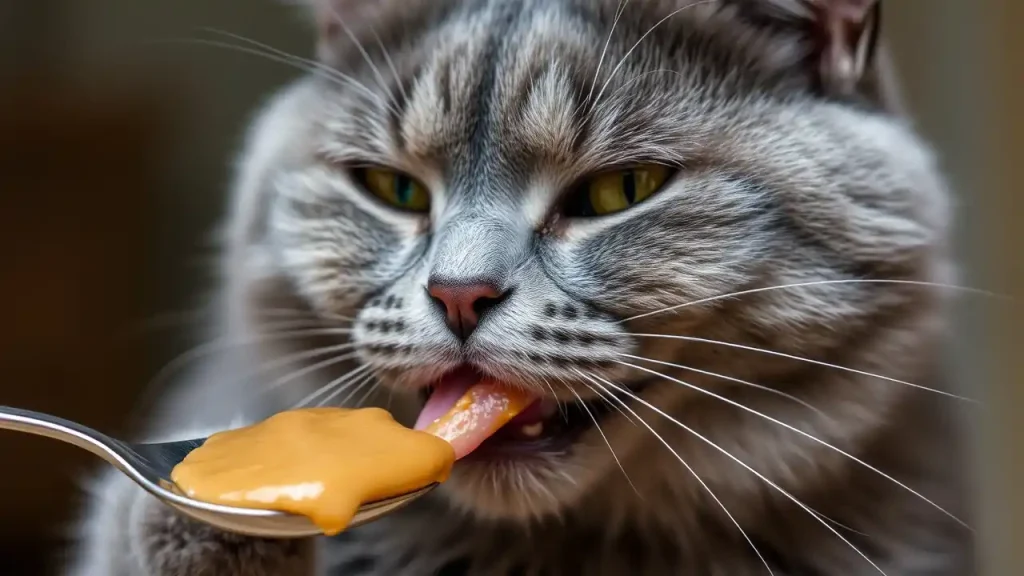
How to Safely Introduce Peanut Butter to Your Cat
Introducing any new human food, including peanut butter, to your cat’s diet should be done cautiously. Begin with a small amount of peanut butter, ideally one that does not contain xylitol, as this sweetener is toxic to cats. Observe your cat for any signs of allergic reactions or digestive upset. If your cat seems to enjoy the taste and has no adverse reactions, peanut butter can be an occasional treat, but it should not replace regular cat food. Keep in mind that peanut butter could lead to health issues if consumed in large quantities.
Recommended Serving Sizes for Cats
When allowing cats to eat peanut butter, moderation is key. A tiny portion, no more than a fingertip amount, is sufficient as an occasional treat. Since peanut butter contains fats and sugars not suited for obligate carnivores, excessive intake can be bad for cats, potentially causing weight gain or digestive problems. Pet parents should prioritize a balanced diet over indulgent treats to maintain a healthy cat. Remember, peanut butter is not a primary food source and is best viewed as an infrequent indulgence.
Alternatives to Peanut Butter for Cats
If you’re considering alternatives to peanut butter for your feline friend, there are several options that are more aligned with a cat’s dietary needs. Here are some safe and satisfying treats for cats:
- Catnip
- Commercially prepared cat treats
- Small pieces of cooked chicken or fish
These alternatives cater to a cat’s natural carnivorous diet and don’t pose the same potential health risks as peanut butter. Always ensure that any treats you provide are free from harmful additives and are given in moderation.
Conclusion
Summarizing the Safety of Peanut Butter for Cats
In summary, while cats can eat peanut butter in small, controlled amounts, it is not inherently safe for cats as a regular treat. Peanut butter could lead to health issues due to its high-fat content and the potential presence of ingredients like xylitol, which are toxic to cats. Peanut butter doesn’t align with a cat’s nutritional needs as obligate carnivores, and better treat options are available. Always approach feeding peanut butter with caution.
Final Thoughts on Feeding Cats Peanut Butter
Feeding peanut butter to cats should be considered a rare indulgence rather than a staple in their diet. While peanut butter is not toxic to cats in small amounts, the potential risks often outweigh the benefits. Pet parents should prioritize a diet that supports their cat’s health, focusing on foods that are safe for cats to eat and nutritionally appropriate. Consulting with a veterinarian can provide further guidance on safe treat options.
When to Consult a Veterinarian
Consulting a veterinarian is essential if you notice any adverse reactions after your cat consumes peanut butter or if you’re unsure about the safety of feeding your cat peanut butter. Symptoms such as vomiting, diarrhea, or lethargy warrant immediate veterinary attention. A vet can offer advice on safe dietary practices and recommend suitable alternatives to human food treats like peanut butter, ensuring your cat’s diet remains healthy and balanced.